
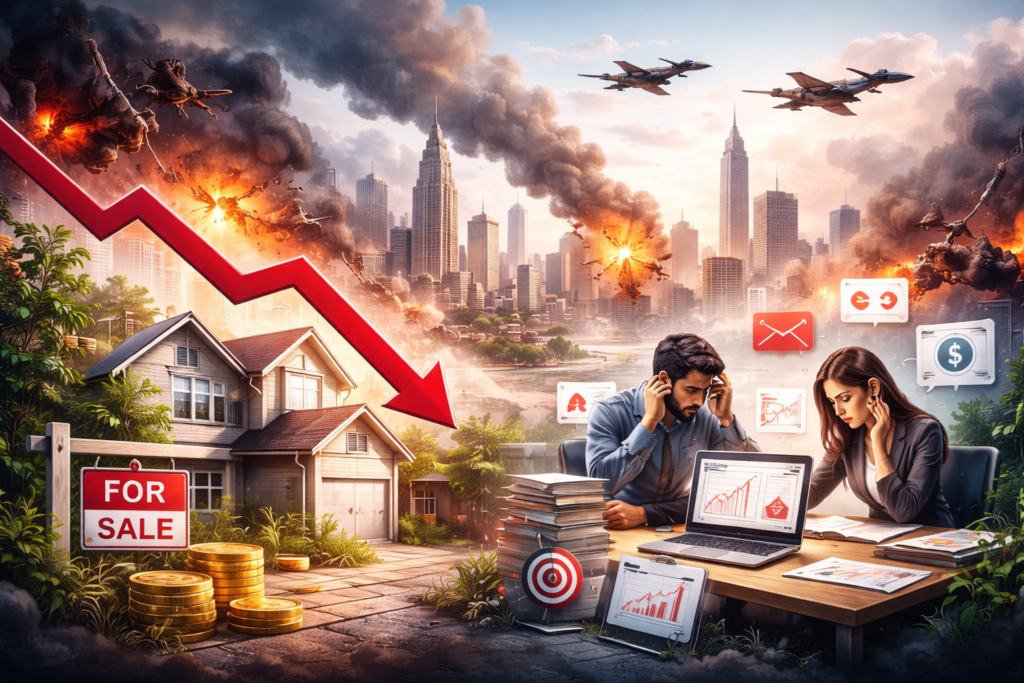
Global conflicts don’t just impact borders they reshape economies, industries, and business behavior across the world. In 2026, rising geopolitical tensions have created uncertainty in multiple sectors, but two industries feeling the pressure more than most are real estate and digital agencies.
For years, both industries relied heavily on consistent lead generation, investor confidence, and predictable growth patterns. But during times of war or global instability, this momentum shifts. Leads slow down, budgets tighten, and businesses begin to rethink priorities.
From property investors delaying decisions to companies cutting marketing spend, the ripple effects are real. Even agencies operating far from conflict zones including every major web design agency New York or web design company in USA are experiencing changes in demand, client behavior, and project scope.
This article explores how war impacts these industries, why leads turn into losses, and how businesses can adapt to survive and grow.
From property investors delaying decisions to companies cutting marketing spend, the ripple effects are real. Even agencies operating far from conflict zones including every major web design agency New York or web design company in USA are experiencing changes in demand, client behavior, and project scope.
This article explores how war impacts these industries, why leads turn into losses, and how businesses can adapt to survive and grow.
How War Disrupts Real Estate Markets
Real estate is one of the most sensitive industries to global uncertainty. When conflict arises, investor confidence is usually the first thing to drop.
Reduced Investor Activity
Investors prefer stability. During uncertain times:
- Property purchases slow down
- Off-plan investments decrease
- International buyers pause decisions
This directly affects developers, brokers, and agencies that depend on a steady flow of leads.
Shift Toward Safer Markets
Instead of high-risk investments, buyers move toward:
- Stable regions
- Ready properties instead of off-plan
- Short-term rental opportunities
This shift changes how real estate businesses generate and convert leads.
Decline in Lead Quality
Even when traffic remains stable, conversion rates drop.
People browse — but don’t commit.
This is where many businesses struggle:
👉 Same traffic, fewer deals
👉 More inquiries, fewer closures
Impact on Digital Agencies
Digital agencies, especially those focused on lead generation, feel the impact quickly.
1. Clients Reduce Marketing Budgets
During uncertain times, companies:
- Cut ad spend
- Delay new website projects
- Pause long-term contracts
This affects every web design company USA and even established firms like a web design company in New York.
2. Shift in Client Priorities
Instead of growth, clients focus on:
- Cost efficiency
- ROI-driven strategies
- Short-term survival
Agencies must adapt from “creative selling” to performance-driven solutions.
3. Increased Competition
As demand slows:
- More agencies compete for fewer clients
- Pricing pressure increases
- Value differentiation becomes critical
This is especially visible among new york web design agency firms competing in a saturated market.
Why Leads Turn Into Losses
This is the core problem businesses are facing.
Emotional Buying Stops
War creates uncertainty reduces decision-making.
Even interested buyers hesitate:
- “Let’s wait and see” mindset
- Fear of financial instability
- Delayed commitments
Longer Sales Cycles
Deals that used to close in weeks now take months.
For both real estate and digital services:
- More follow-ups required
- More nurturing needed
- Lower conversion rates
Trust Becomes Critical
In uncertain times, people only buy from brands they trust.
Weak branding = lost leads
Strong positioning = retained clients
Role of Digital Presence During Crisis
Interestingly, while conversions drop, online activity increases.
People research more. Compare more. Think more.
This creates an opportunity for:
- Agencies
- Real estate brands
- Service providers
A strong digital presence built by a web design agency USA or web design USA expert team becomes a long-term asset.
How Smart Agencies Adapt
The best-performing agencies don’t panic — they pivot.
1. Focus on Conversion Optimization
Instead of chasing traffic, they improve:
- Landing pages
- User experience
- Call-to-actions
2. Offer Flexible Solutions
Clients want:
- Scalable pricing
- Short-term contracts
- Performance-based models
3. Build Trust Through Content
Educational content becomes powerful:
- Blogs
- Market insights
- Case studies
This builds authority and keeps leads warm.
Opportunities Hidden in Crisis
Not everything is negative.
1. Less Competition in Ads
When businesses reduce spending:
Cost per click decreases
Visibility becomes cheaper
2. Long-Term Branding Advantage
Companies that stay active:
- Gain market share
- Build trust
- Outperform competitors later
3. Digital Transformation Acceleration
More businesses move online, increasing demand for:
- Website development
- SEO services
- UX optimization
This benefits every web design company in USA that positions itself correctly.
Real Estate + Digital = Survival Strategy
The smartest businesses combine both:
Strong digital presence
Smart real estate positioning
This includes:
- SEO-optimized websites
- Lead capture systems
- Mobile-first design
- Fast loading platforms
A reliable web design company in new york or web design agency new york can play a crucial role in building such systems.
Future Outlook
While uncertainty continues, markets will stabilize over time.
Businesses that:
- Adapt quickly
- Focus on value
- Maintain visibility
will recover faster and grow stronger.
FAQs
1. How does war affect real estate markets?
War reduces investor confidence, slows transactions, and lowers conversion rates.
2. Why are digital agencies losing clients during uncertain times?
Clients reduce budgets, delay projects, and focus only on essential spending.
3. Can businesses still generate leads during a crisis?
Yes, but conversion requires stronger trust, better UX, and strategic positioning.
4. How can agencies adapt to market downturns?
By focusing on ROI-driven services, flexible pricing, and content marketing.
5. Is digital presence important during global uncertainty?
Yes, it becomes even more important for visibility, trust, and long-term growth.
Conclusion
War and global uncertainty create challenges that transform industries. For real estate and digital agencies, the shift from leads to losses is not just about reduced demand it’s about changing behavior, longer decision cycles, and increased competition.
However, businesses that adapt strategically can turn these challenges into opportunities. By focusing on trust, performance, and digital strength, companies can maintain growth even during difficult times.
Whether it’s a real estate firm or a web design company USA, success now depends on resilience, adaptability, and the ability to evolve with changing market conditions.